

When a platform built to support women disappears, we don’t just lose an app. We lose a safe space, a community, and another opportunity to help women feel less alone.
Today, Rayover officially closes its doors.
I’ve been staring at my screen for quite some time, wondering how to begin writing this. Should I say goodbye? Should I say thank you?
Or should I say what many founders quietly feel but rarely have the courage to say out loud?
For most people, Rayover was simply another app.
For me, it was never just an app. It was a platform that believed women deserved a place where they could share their stories, ask difficult questions, celebrate small victories, and find comfort in knowing they weren’t alone.
That kind of platform is rare. And today, we lost one.
As the Founder of PCOS Millennials, Rayover’s closure feels personal.
Not because we had a business contract. Not because there was money involved. But because we shared the same belief.
That every woman deserves to be heard. That women’s health deserves attention. That creating a safe space for women isn’t just a business idea. It’s a responsibility.
When I first discovered Rayover, I immediately saw something familiar.
I saw a team trying to build more than technology. They were building trust. They were building conversations. They were building a community where women could speak openly without fear of judgment. That resonated deeply with me because that is exactly why I started PCOS Millennials.
Years ago, when I was diagnosed with Polycystic Ovary Syndrome (PCOS), I realized how lonely that journey could be.
There were questions nobody around me could answer. There were emotions I didn’t know how to explain. There were moments when I simply wanted someone to tell me,
“You’re not alone.”
That experience eventually became the reason I created PCOS Millennials. Not because I wanted another website. Not because I wanted followers. Not because I wanted recognition.
I simply wanted to build the kind of community I wish had existed when I was first diagnosed.
When I learned about Rayover, I knew we were trying to solve the same problem in different ways. We both believed that women deserve spaces where they can speak honestly, ask vulnerable questions, and support one another without shame.
That’s why I decided to reach out.

A Simple Email That Started a Meaningful Partnership
In March 2026, I sent an email to the Rayover team.
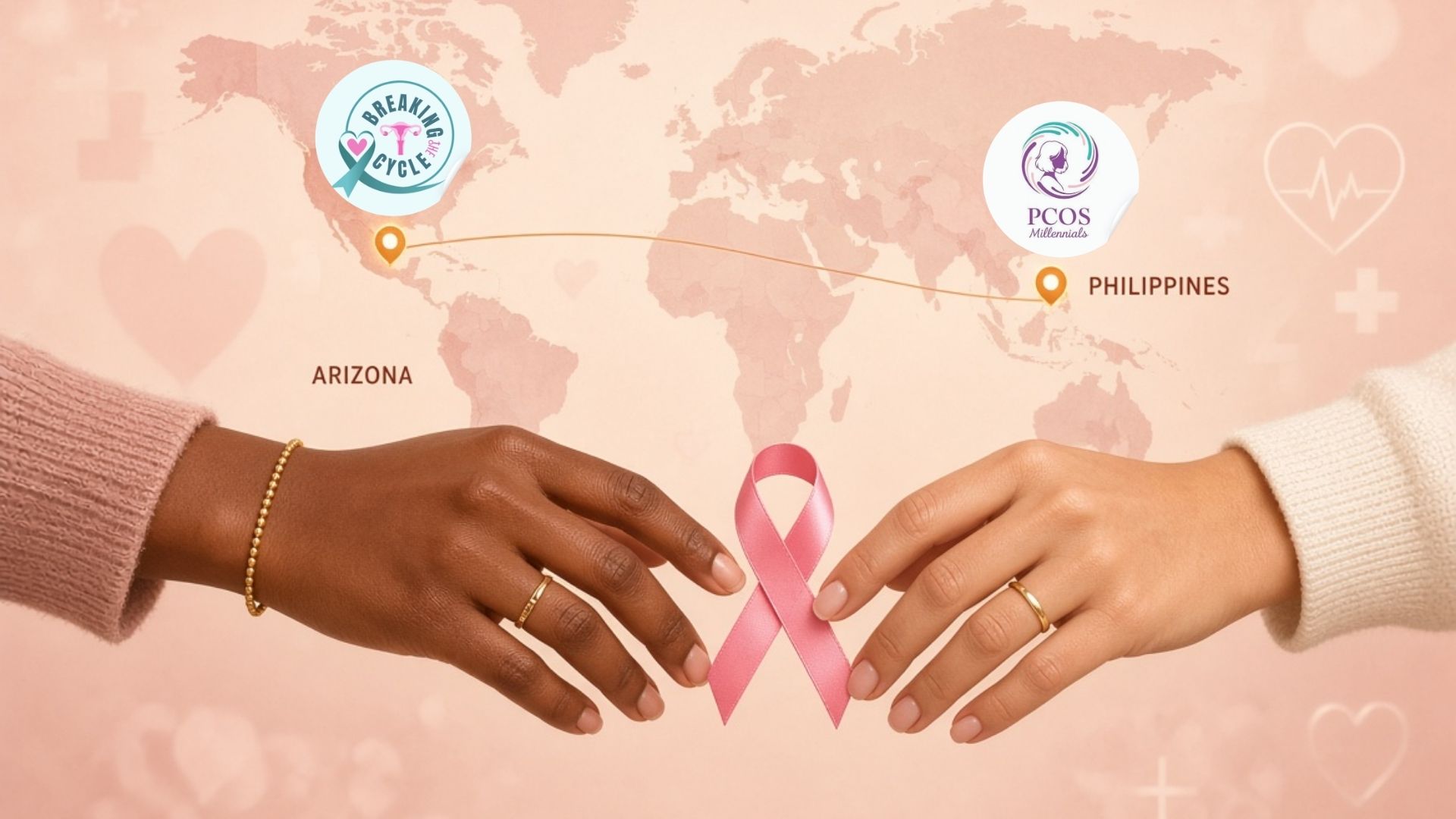
I introduced myself and shared the story behind PCOS Millennials. I told them that I admired what they were building because our missions were incredibly similar. Both of us wanted to empower women. Both of us believed in community and believed that women deserve safe spaces online.
I wasn’t asking for sponsorship.
I wasn’t asking for funding. I wasn’t asking them to advertise PCOS Millennials. I simply wanted to explore whether two organizations with the same heart could work together.
Looking back now, I’m grateful I pressed “Send.” Because they didn’t ignore the email.
They didn’t send a generic response.
They replied with honesty. They explained that Rayover was still in its early stages and that their priority was stabilizing the platform and improving the experience for users. But what impressed me wasn’t their explanation.
It was what they said next.
They believed there was potential for collaboration between our communities and invited me to share my ideas. That may sound like a small thing. But if you’ve ever built an advocacy from the ground up, you know how meaningful it is when another organization simply says,
“We’d like to hear your ideas.”
Sometimes, that’s all a founder needs. Someone willing to listen.

Building Something Together
After a few conversations, I shared my vision.
I wanted to create a dedicated PCOS community inside Rayover. A place where women could freely discuss PCOS, insulin resistance, fertility, mental health, and the emotional challenges that often come with living with a chronic condition.
I also wanted to make free educational resources available to their users, including the eBooks I had written for women navigating PCOS.
Once again, they listened. Instead of telling me what couldn’t be done, they focused on what could. They suggested making my existing PCOS Warriors Circle public so more women could discover it. They offered to feature it in their Circles in the Spotlight section.
They even proposed publishing an official collaboration announcement introducing PCOS Millennials to the Rayover community.
A few weeks later, they did exactly what they promised. Our Circle appeared in the Spotlight. The collaboration was announced through their official account.
Our advocacy became part of their growing community.
Today, that Circle has grown to 294 members. Two hundred ninety-four people may not seem like a huge number to companies measuring success by millions of users.
But to me?
That’s 294 women who chose to join a community because they were looking for understanding. That’s 294 stories. 294 journeys. 294 reminders that what we were building together mattered.
Those numbers represented real people.
Not statistics. Not analytics. Real women searching for hope.

What Rayover Understood About Women’s Advocacy
One thing I’ll always appreciate about Rayover is this.
They understood that communities aren’t built through algorithms alone. They’re built through empathy. They didn’t see PCOS Millennials as a competitor.
They saw us as a partner.
That mindset is rare especially today many platforms compete for attention. Many organizations compete for funding. Many founders are constantly trying to prove why their work deserves to survive.
Rayover chose collaboration instead.
They understood that when organizations work together, more women benefit. That lesson is bigger than any app. It’s a reminder that advocacy grows faster when people choose partnership over competition.
And honestly… I wish more organizations believed that.
The Reality Behind Every Women’s Advocacy
One of the biggest misconceptions about running an advocacy platform is that people think it becomes easier once the website is live. It doesn’t.
Launching a website is only the beginning.
Every article needs research, community needs moderation, message deserves a thoughtful reply and email requires time. Every feature has to be tested, security update matters, plugin needs to be renewed, domain expires and every hosting bill arrives.
Every platform demands continuous maintenance.
People often say, “It’s just a website.” No. It isn’t.
A website like Rayover wasn’t just a website. PCOS Millennials isn’t just a website either. Behind every page is a founder who made difficult choices.
Choices that most people will never see.
There are weekends spent writing instead of resting. Late nights answering messages from women who are scared after receiving a diagnosis. Hours spent learning skills that were never part of the original dream—SEO, website maintenance, cybersecurity, analytics, social media, fundraising, graphic design, and content creation.
When you don’t have a large team, you become everything.
You become the writer, the editor. the support representative, the marketer, the website administrator, the community manager, the fundraiser and somehow, you’re expected to keep smiling while carrying responsibilities that would normally belong to an entire company.
That is the reality of many founders building a women’s advocacy in the Philippines.

Passion Alone Doesn’t Keep a Platform Alive
People often encourage founders to “follow your passion.”
It’s beautiful advice but passion doesn’t pay hosting bills, it doesn’t renew domains, it doesn’t pay developers. Passion doesn’t buy software licenses, doesn’t improve accessibility, doesn’t protect a website from security threats.
Passion alone doesn’t keep a community online.
The truth is that many founders quietly use their own savings just to make sure their communities continue serving others. Some work full-time jobs and build their advocacy at night. Some sacrifice vacations, delay personal goals, postpone starting families.
Some quietly accumulate debt.
Not because they’re irresponsible but because they believe their mission matters. These stories rarely make headlines.
We celebrate billion-dollar startups.
We celebrate unicorn companies andcelebrate record-breaking investments. But somewhere in the background are founders building platforms that change lives every single day—without venture capital, without celebrity endorsements, and without a marketing budget.
Their success isn’t measured by stock prices.
It’s measured by the woman who finally feels understood. The woman who finds answers. The woman who realizes she isn’t alone anymore.
That impact deserves recognition too.

Rayover’s Story Isn’t Unique
As heartbreaking as today feels, Rayover’s story is not unique.
Across the Philippines, there are founders creating communities that genuinely improve people’s lives. Mental health advocates, women’s health advocates organizations supporting survivors, communities helping people living with chronic illnesses grassroots initiatives educating underserved communities.
These founders don’t lack passion.
They don’t lack ideas. They don’t lack determination. What many of them lack is opportunity. Sometimes all they need is one partnership.
One grant.
One sponsor who believes in their vision. One company willing to invest in impact—not just profit. I often wonder how many meaningful organizations disappear quietly every year, not because their mission failed. But because they simply ran out of resources.
How many communities never reach the people who need them most because funding never came?
How many founders give up—not because they stopped caring, but because they could no longer carry the financial burden alone? Those are questions worth asking.
Because when advocacy disappears, society loses something that cannot easily be replaced.

A Message to Investors, Foundations, and CSR Leaders
If you’re reading this as someone who has the ability to fund meaningful work, I hope you’ll look beyond numbers alone.
Not every life-changing platform begins with millions of users. Not every founder has a polished pitch deck. Not every advocacy has a full-time fundraising team.
Some are built by one person who refuses to let another woman feel invisible.
When PCOS Millennials reached out to Rayover, they didn’t ask how many followers we had before deciding whether to work with us. They looked at our mission. They saw our purpose.
They believed there was room for collaboration because both of us wanted to serve women.
That kind of thinking creates real impact. Imagine how many more organizations could thrive if more companies, grant makers, and CSR programs chose to invest that way.
Support doesn’t always have to be millions of pesos.
Sometimes it begins with a conversation. Sometimes it begins with mentorship. Sometimes it’s access to networks. Sometimes it’s simply opening a door that a small organization could never open alone.
A single opportunity can change the future of an advocacy.

Why I Continue Building PCOS Millennials
I’ll admit something that isn’t easy to say.
There have been days when I wondered whether I should stop. Days when I questioned whether all the sacrifices were still worth it. Days when I thought about letting someone else continue what I had started.
Not because I stopped believing in women.
Not because I stopped believing in PCOS awareness but because carrying an advocacy alone can be exhausting. Then I remember the messages.
The women who tell me they finally understood what PCOS is after reading one of our articles.
The women who say they felt seen after joining our community. The women who realized they weren’t alone. Those moments remind me why PCOS Millennials exists.
It was never created to become the biggest platform.
It was created so that one woman searching for answers could find a place that welcomed her with compassion instead of judgment. That purpose still matters.
And it always will.

Thank You, Rayover
Today marks the end of Rayover’s journey.
But I hope it isn’t the end of its impact. I hope people remember that behind this platform was a team that believed women deserved to be heard. I hope they remember that they chose collaboration over competition.
I hope they remember that they gave a small advocacy like PCOS Millennials the opportunity to reach more women through our partnership and the PCOS Warriors Circle.
For that, I will always be grateful.
Thank you for believing in our mission. Thank you for reminding us that kindness still exists in the startup world. Thank you for showing that partnerships don’t always begin with contracts.
Sometimes, they begin with shared values.
Before Another Platform Disappears
If there’s one thing I hope readers take away from this story, it’s this:
Please don’t wait until an advocacy closes before recognizing its value. Support organizations while they’re still building. Partner with founders while they’re still fighting to keep their mission alive.
Invest in communities before they’re forced to say goodbye.
Because when a platform built with genuine care for women disappears, we lose more than technology. We lose trusted spaces. We lose opportunities to educate. We lose communities where women found comfort during some of the most difficult moments of their lives.
Rayover may have closed today.
But I sincerely hope its story becomes the reason another women’s advocacy receives a grant. Another women’s health platform finds a partner. Another founder chooses not to give up. And perhaps, years from now, another woman searching for answers will still find a community that tells her the words we all need to hear at some point in our lives:
You are not alone.
Take Free Insulin Resistance Test

Take Free PCOS/PMOS Test

Take Free Fertility and Ovulation Test

Free January–December 2026 Devotional eBook from PCOS Millennials

Free eBook for Every Millennial Woman with PCOS: Your Ultimate Guide to Thriving with Hormonal Imbalance



Leave a Reply