

For years, millions of women around the world have known the condition by one name: PCOS.
Some first heard those four letters after months of irregular periods. Others discovered it after years of unexplained weight gain, severe acne, infertility struggles, fatigue, anxiety, hair thinning, or feeling like their bodies were constantly fighting against them.
But despite how common the condition is, many women quietly felt that the name itself never fully explained what they were experiencing.
“How can I have Polycystic Ovary Syndrome if I don’t even have cysts?”
“Why does this affect my weight, insulin, mental health, cravings, and energy levels if this is supposedly just an ovarian condition?”
“Why do I feel like my entire body is affected?”
Now, after more than a decade of global research, patient consultation, medical debate, and international collaboration, experts have officially introduced a new name:
Polyendocrine Metabolic Ovarian Syndrome (PMOS).
The announcement was formally presented during the European Congress of Endocrinology in Prague on May 12, 2026 and published alongside international medical discussions connected to The Lancet. Major outlets including STAT News, The Guardian, ABC Australia, New Scientist, and international endocrine organizations covered the announcement almost immediately because of how significant the change is for women’s health worldwide.
For many women, this feels bigger than a simple name change.
It feels validating. Because finally, the medical world is publicly acknowledging something women with PCOS have been trying to explain for years:
This condition is not just about ovaries.
It is a complex hormonal, endocrine, reproductive, and metabolic condition that affects the entire body.
And for many Filipinas living with PCOS in silence, that recognition matters more than people may realize.

Why Did Experts Change the Name From PCOS to PMOS?
The decision to rename PCOS did not happen overnight.
According to STAT News and ABC Australia, the process reportedly involved more than 22,000 participants and over a decade of international consultation involving researchers, endocrinologists, gynecologists, reproductive medicine experts, patient advocacy groups, and women actually living with the condition themselves.
This was not simply a social media trend or a random medical rebranding.
It was a long global effort because many experts believed the old name “Polycystic Ovary Syndrome” had become scientifically misleading.
One of the biggest problems with the old term is this:
Many women diagnosed with PCOS do not actually have ovarian cysts.
The “cysts” commonly associated with PCOS are often immature follicles — small sacs containing eggs that failed to mature properly during ovulation. They are not true ovarian cysts in the traditional medical sense.
For years, that misunderstanding created confusion among patients, families, and even healthcare professionals.
Some women were told:
“You don’t have cysts, so maybe you don’t have PCOS.”
Others were diagnosed very late because doctors focused too heavily on ovarian appearance during ultrasounds rather than the broader hormonal and metabolic symptoms happening throughout the body.
Some women spent years feeling invalidated because the condition they were living with did not match what the old name suggested.
That is one of the biggest reasons international experts pushed for a new name.
They wanted terminology that reflects what the condition truly is.

The 14-Year Global Process Behind the PMOS Name Change
One thing many people still do not realize is how massive the renaming process actually was.
The Guardian described it as a 14-year international collaboration involving experts and patient voices across six continents.
STAT News reported that researchers and medical organizations gathered feedback from around 22,000 people over 11 years before arriving at the final terminology.
ABC Australia also highlighted that this was not just led by one country or organization. It involved international endocrine societies, reproductive health experts, and global patient advocacy communities.
The effort was led by Professor Helena Teede from Monash University in Australia together with international collaborators connected to endocrine and reproductive medicine organizations worldwide.
According to reports, the process included:
- global surveys,
- scientific reviews,
- patient consultations,
- consensus-building meetings,
- debates among specialists,
- and years of discussions regarding whether the old terminology was still medically appropriate.
The fact that this process took more than a decade shows how seriously the medical community approached the decision.
Changing the name of a globally recognized condition is not simple.
Medical terminology affects:
- clinical guidelines,
- research publications,
- insurance systems,
- diagnostic standards,
- public awareness campaigns,
- hospital systems,
- and healthcare education worldwide.
That is why experts wanted the change to be backed by evidence, consultation, and broad international agreement rather than emotion alone.

What Does PMOS Mean?
The new term — Polyendocrine Metabolic Ovarian Syndrome — was carefully chosen to reflect the whole-body nature of the condition.
Polyendocrine
The word “polyendocrine” means multiple hormone systems are involved. This matters because PCOS affects much more than reproductive hormones.
Women living with the condition may experience disruptions involving:
- insulin,
- testosterone,
- estrogen,
- progesterone,
- cortisol,
- luteinizing hormone,
- follicle-stimulating hormone,
- and broader endocrine pathways throughout the body.
For years, many women felt their condition was treated too narrowly as merely a fertility issue or menstrual problem.
But modern research increasingly shows the condition affects multiple hormonal systems simultaneously.
The inclusion of “polyendocrine” acknowledges that complexity.
Metabolic
This may be one of the most important additions to the new name.
Experts intentionally included the word “metabolic” because insulin resistance and metabolic dysfunction are now understood to be major components of the condition for many women.
This is important because countless women with PCOS struggle with:
- rapid weight gain,
- difficulty losing weight,
- intense cravings,
- fatigue,
- blood sugar issues,
- inflammation,
- prediabetes,
- high cholesterol,
- and increased risk of type 2 diabetes.
For years, many women were unfairly blamed for these struggles.
Some were told:
“Magpapayat ka lang.”
“Exercise lang kailangan.”
“Kulang ka lang sa discipline.”
But metabolic dysfunction is far more complex than simple willpower.
The new terminology validates that these symptoms are connected to real biological and hormonal processes happening inside the body.
For many women, especially Filipinas who have been body-shamed because of PCOS symptoms, that validation matters emotionally.
Ovarian
The ovaries are still part of the condition.
PMOS still affects:
- ovulation,
- menstrual cycles,
- fertility,
- and reproductive hormone regulation.
However, the ovaries are no longer treated as the only defining feature of the condition.
This is one of the biggest shifts behind the name change.
Experts wanted women and healthcare providers to understand that the condition goes beyond ovarian appearance.
Syndrome
“Syndrome” refers to a group of symptoms and health effects that can vary from person to person.
This is important because PMOS does not look exactly the same in every woman. Some women struggle mainly with fertility. Others struggle more with insulin resistance and weight gain.
Some battle severe acne and hair growth. Others experience chronic fatigue, depression, or anxiety more intensely.
PMOS is highly individualized, which is why diagnosis and treatment can sometimes feel complicated.

Why the Old Name PCOS Became Harmful for Many Women
One of the strongest reasons experts pushed for the renaming is because many women reported that the old terminology caused misunderstanding, stigma, delayed diagnosis, and incomplete care.
According to reports from The Guardian and patient stories shared internationally, some women spent years feeling ignored because they did not fit the stereotypical image people had of PCOS.
Others said doctors focused too heavily on fertility while ignoring:
- mental health,
- insulin resistance,
- cardiovascular risks,
- inflammation,
- emotional exhaustion,
- and long-term metabolic health.
Some women reported feeling reduced to their ability to become pregnant rather than treated as whole people living with a complex chronic condition.
That emotional burden became part of the global conversation surrounding the renaming effort. Because for many women, PCOS has never only been about periods or fertility.
It affects confidence. It affects self-esteem. It affects relationships. It affects mental health. It affects the way women see themselves.

Why This Name Change Matters So Much for Filipinas
For many Filipinas, living with PCOS is emotionally exhausting in ways people around them may never fully understand. In Filipino culture, women often carry enormous expectations.
There is pressure to:
- stay slim,
- remain feminine,
- eventually have children,
- look healthy,
- and stay emotionally strong no matter what is happening internally.
For women living with PCOS, these expectations can become deeply painful.
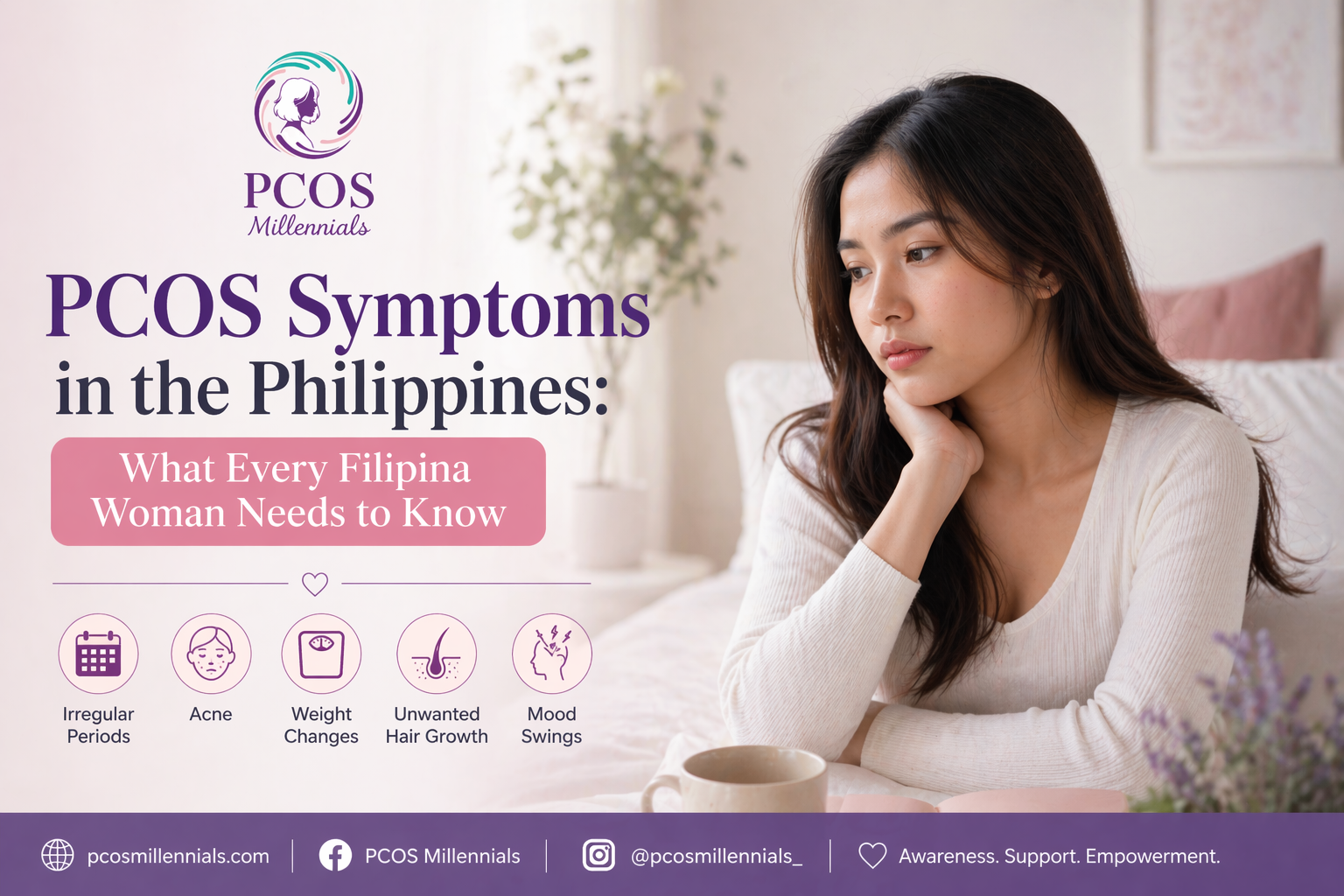
Some women gain weight rapidly despite trying to eat healthier. Others experience severe acne well into adulthood. Some struggle with hair thinning or unwanted facial hair.
Others silently battle infertility fears long before marriage even becomes part of the conversation.
Meanwhile, many continue functioning every day while quietly carrying emotional exhaustion nobody around them sees. This is why the shift from PCOS to PMOS feels emotionally important for many women.
Because finally, the condition is being recognized as more than simply “ovarian cysts.”
The Filipina Reality of Living With PCOS
Many Filipinas grow up in environments where reproductive and hormonal health are still uncomfortable topics. Some are embarrassed to discuss irregular periods.
Others normalize symptoms and some filipina women do not seek medical help until they experience infertility, severe acne, blood sugar problems, major weight changes, or emotional breakdown from years of frustration.
Meanwhile, many silently compare themselves with women whose bodies seem to function normally.
That emotional comparison slowly affects confidence over time.
The recognition of PMOS as a metabolic and endocrine condition may eventually help reduce some of that misunderstanding because the new name immediately signals that the condition involves multiple systems in the body.

Why Many Women With PCOS Feel Constantly Tired
One symptom many women describe but society often overlooks is exhaustion.
Not ordinary tiredness.
But deep, frustrating fatigue that makes even simple daily tasks feel overwhelming.
Research increasingly shows that hormonal imbalance, insulin resistance, inflammation, blood sugar instability, poor sleep quality, and emotional stress can all contribute to fatigue in women with PCOS.
Yet many women are still told:
“Pagod ka lang.”
“Kulang ka lang sa tulog.”
“Tinamad ka lang.”
The problem is that people often underestimate how much hormonal and metabolic dysfunction can affect physical energy and emotional well-being.
For many women, PMOS finally gives language to what they have been experiencing internally for years.

The Mental Health Side of PMOS That People Ignore
One of the strongest themes emerging from patient stories worldwide is emotional exhaustion.
Hormonal imbalance itself can affect:
- mood,
- anxiety,
- depression,
- emotional regulation,
- and self-esteem.
But beyond biology, many women also carry years of frustration from trying to “fix” symptoms without understanding what is happening internally.
Some women become afraid to look in mirrors. Some avoid social gatherings because of acne or weight changes. Some stop taking pictures because they no longer recognize themselves.
Others silently grieve fears about fertility, relationships, or future motherhood.
And sadly, many women suffer quietly because hormonal and reproductive health are still stigmatized conversations in many cultures, including the Philippines.
This is why many women reacted emotionally to the PMOS announcement online.
For some, it felt like the medical world was finally acknowledging the emotional reality of the condition.

Is WHO Already Officially Using PMOS?
This is important to clarify carefully.
As of May 2026, the World Health Organization still officially uses the term “PCOS” on its fact sheets and public resources.
This means the transition toward PMOS is still ongoing globally.
However, the PMOS announcement itself is backed by major international experts, endocrine organizations, reproductive medicine groups, and publications associated with The Lancet and the European Congress of Endocrinology.
According to reports, updated global clinical guidelines may continue transitioning toward PMOS through around 2028.
This means the world is currently in a transition phase where:
- some researchers may start using PMOS,
- many doctors may still say PCOS,
- and both names may appear together for years.
This kind of gradual transition is actually common in medicine whenever scientific understanding evolves.

Could the Philippines Eventually Adopt the PMOS Terminology?
Possibly, yes.
But like many global medical changes, it may take time before hospitals, clinics, universities, healthcare systems, insurance providers, and government health agencies in the Philippines fully adopt the new terminology.
Many doctors may continue using “PCOS” for years because it is still the most widely recognized term among patients and healthcare systems.
However, the larger importance is not simply the name itself. It is the growing understanding behind the name. Because the PMOS terminology pushes healthcare providers to see the condition more holistically.
Not only as a reproductive issue.
But also as:
- a metabolic condition,
- an endocrine disorder,
- a mental health concern,
- and a long-term health issue affecting the whole body.
That shift could eventually improve healthcare conversations in the Philippines.

Why Earlier Diagnosis Matters
According to WHO, PCOS affects around 10–13% of women of reproductive age worldwide, yet up to 70% remain undiagnosed globally.
That statistic alone suggests millions of women may still be struggling silently.
In the Philippines, delayed diagnosis may happen because of:
- limited access to specialists,
- expensive healthcare costs,
- lack of awareness,
- and stigma surrounding women’s health.
Some women normalize symptoms for years because they assume everyone experiences the same thing.
Others only seek help once symptoms become severe.
Earlier awareness about PMOS may eventually help women recognize symptoms sooner and seek support earlier.

The Danger of Reducing PCOS to Weight Alone
One of the most painful realities many women with PCOS experience is being judged entirely based on weight.
People often assume the condition is simply about obesity or lack of discipline. But not every woman with PCOS is overweight and even for women who do struggle with weight gain, the hormonal and metabolic challenges involved are far more complex than many people realize.
Insulin resistance, inflammation, hormonal imbalance, stress, sleep disruption, genetics, and endocrine dysfunction can all affect body weight regulation.
Reducing the condition to “just lose weight” oversimplifies a much deeper medical issue. That is one reason experts strongly wanted the word “metabolic” included in PMOS.
Because it publicly recognizes that these struggles are biological — not simply personal failure.

Social Media and the Rise of PMOS Awareness
One reason the PMOS announcement spread so quickly online is because many women immediately related to it emotionally.
Platforms like:
- TikTok,
- Instagram,
- X,
- and Facebook
were quickly filled with reactions from women saying:
“Finally.”
“This makes more sense.”
“This validates what I’ve been feeling.”
Even major medical communities online, including Reddit’s medical discussions and healthcare commentary spaces, began discussing the significance of the renaming almost immediately.
For many women, the conversation felt overdue.
What Filipinas With PCOS Should Remember Right Now
Whether doctors currently use the term PCOS or PMOS, the most important thing to remember is this:
Your symptoms are real. Your struggles are valid. And your condition is not simply about ovaries. Women living with PMOS deserve informed healthcare, compassionate treatment, emotional support, proper diagnosis, and long-term holistic care.
No woman should feel ashamed because of hormonal or metabolic struggles she did not choose.
The renaming of PCOS to PMOS is not just a small medical update.
It represents years of advocacy, scientific progress, patient voices, and growing recognition that women’s hormonal health is far more complex than society once believed.
For many Filipinas, this change feels important because it finally acknowledges something women have experienced for years:
This condition affects the entire body.
And hopefully, as awareness continues spreading worldwide and eventually reaches more healthcare systems in the Philippines, more women will finally receive earlier diagnosis, better understanding, less stigma, and more compassionate care.
Because women living with PMOS are carrying far more than “cysts.”
Free January–June 2026 Devotional eBook from PCOS Millennials

Free eBook for Every Millennial Woman with PCOS: Your Ultimate Guide to Thriving with Hormonal Imbalance




Leave a Reply