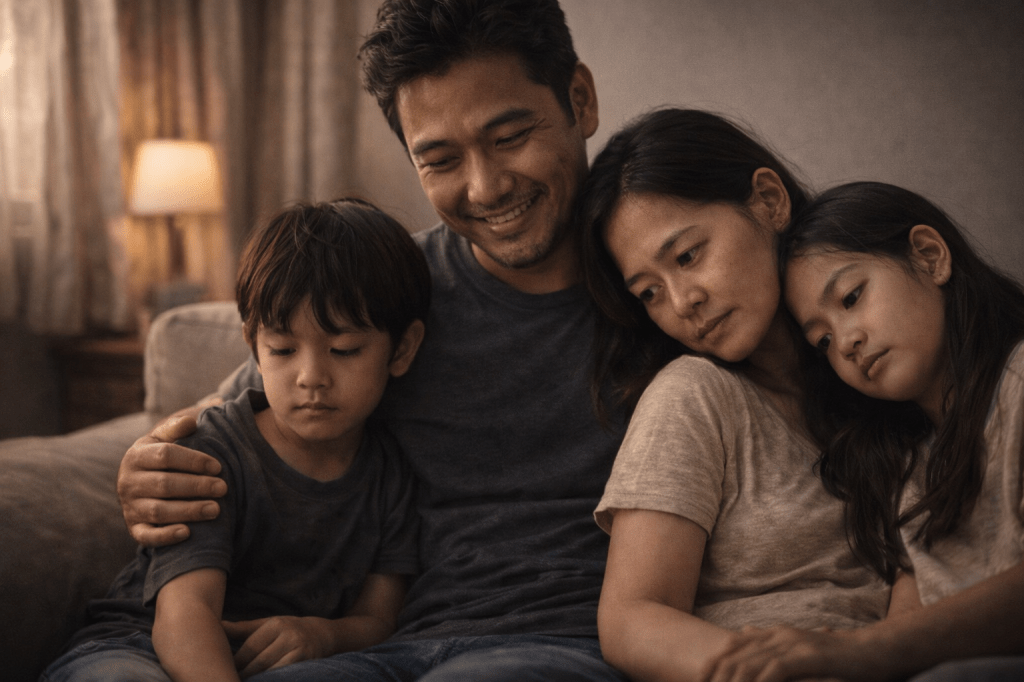
There are wounds that don’t bleed.
There are words that don’t shout — but stay.
May mga pamilya na sa labas ay maayos. Smiling. Composed. Faith-filled.
But inside, someone is shrinking.
In recent weeks, public conversations surrounding a former dancer and her husband have stirred strong reactions online. Statements about faith. Identity. Parenting. Acceptance. Rejection. The LGBTQ+ issue. A phrase about parenthood that felt heavy.
People chose sides.
But beyond social media debates, a deeper question remains:
What happens psychologically inside a marriage and a family when love starts to feel conditional?
This is not a diagnosis.
This is not an attack.
This is a psychological lens — grounded in research — on patterns that many women silently experience.
And maybe… you do too.

Understanding the Background: More Than Just Headlines
She rose to fame as part of a well-known dance group in the early 2000s.
She built a career in entertainment, later transitioning into motherhood and a more private life. Her husband, known for his acting career during his youth, later became vocal about his faith and personal convictions.
They formed a blended family — something very common in the Philippines. A marriage that includes children from previous relationships. A shared future built on past chapters.
But when public statements began circulating — especially regarding religious framing, LGBTQ+ identity, and distancing language about parenthood — the conversation shifted from celebrity talk to something deeper.
Because when statements become public, their impact becomes public too.
And families feel that weight.

Narcissistic Traits vs Narcissistic Personality Disorder
Let’s clarify something important.
Narcissistic Personality Disorder is a clinical diagnosis.
It requires structured psychological assessment. No one can diagnose someone from interviews or online behavior alone.
However, psychology also recognizes narcissistic traits — behavioral patterns that can exist without meeting criteria for a disorder.
According to medical literature (StatPearls, NCBI), traits associated with narcissism may include:
- Grandiosity or moral superiority
- Strong need to control narrative
- Limited empathy
- Defensive reactions to criticism
- Framing oneself as consistently misunderstood or morally right
When these patterns repeatedly show up in relationships — especially publicly — they can affect family dynamics deeply.
This is not about labeling a person.
This is about recognizing patterns.
When Faith Becomes a Shield Instead of a Bridge
Faith can heal.
Faith can guide.
Faith can soften hearts.
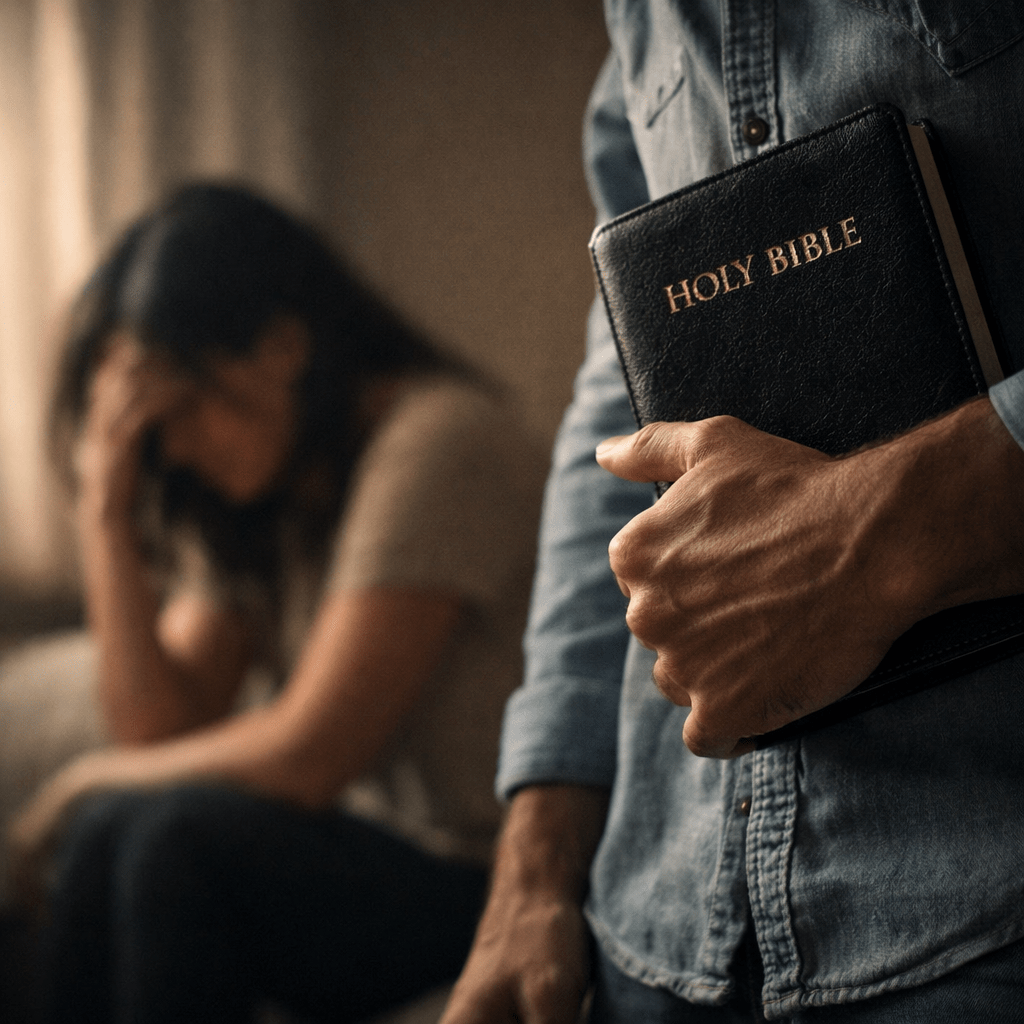
But sometimes, faith language is used to override emotional conversations.
In psychology, there is a concept called “spiritual bypassing” — using religious or spiritual reasoning to avoid emotional accountability or dismiss someone else’s pain.
When one partner speaks from moral authority without emotional validation, the other partner may feel silenced.
And when identity — especially LGBTQ+ identity — becomes framed only through doctrine rather than compassion, the emotional impact can be significant.
The issue is not belief.
The issue is when belief replaces empathy.
Trauma Bonding: Why It’s So Hard to Walk Away
Maraming kababaihan sa Pilipinas ang nasa blended family setup. They carry a past. They carry children. They carry stories.
When a woman hears, “Tinanggap kita kahit may anak ka,” it can feel like grace.
But when that acceptance becomes a reminder of indebtedness, something shifts.
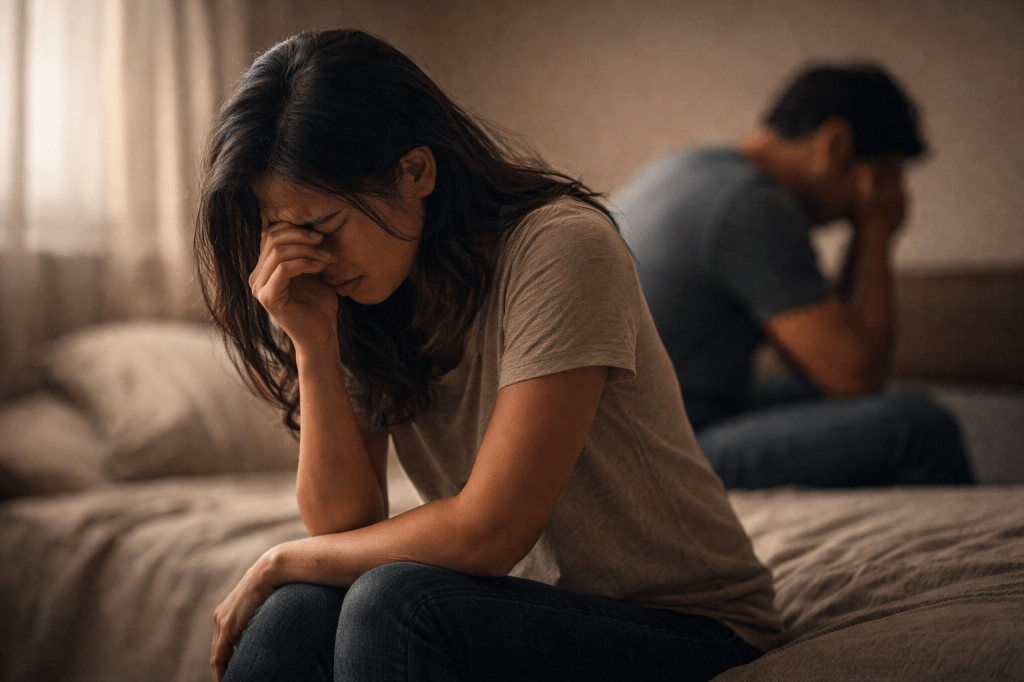
Trauma bonding, a concept popularized by Patrick Carnes, describes strong emotional attachments formed through cycles of hurt and intermittent reassurance.
Pain.
Then affection.
Then tension.
Then hope.
Then pain again.
Because of intermittent reinforcement (a behavioral psychology principle), attachment deepens — even when harm exists.
Reference:
Carnes, P. (Trauma Bonds)
https://healingtreenonprofit.org/wp-content/uploads/2016/01/Trauma-Bonds-by-Patrick-Carnes-1.pdf
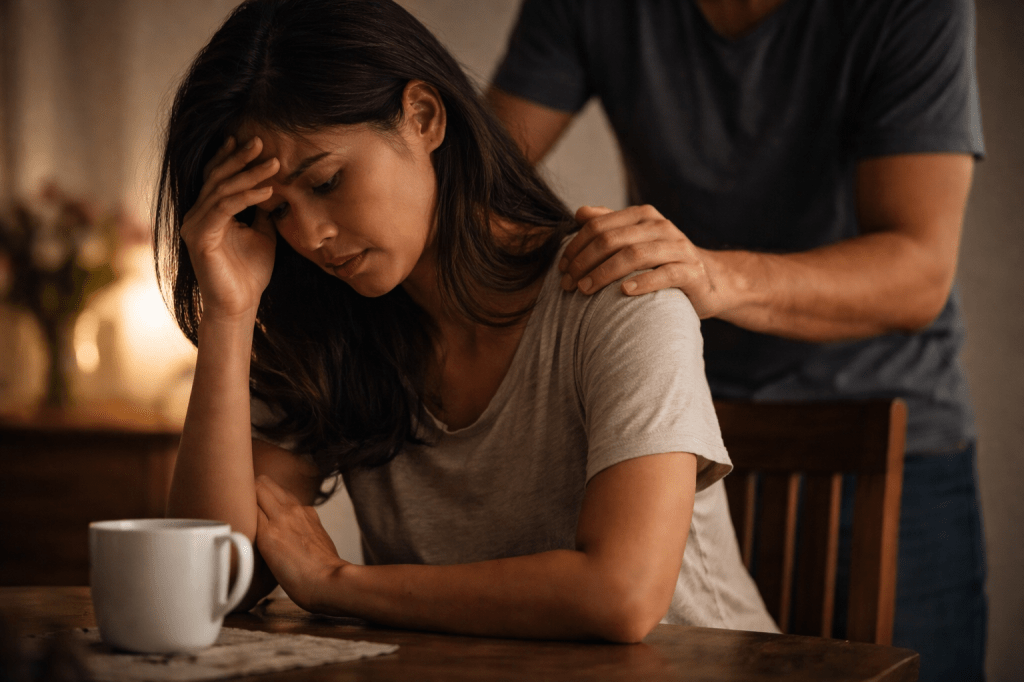
Sometimes the question is not “Why doesn’t she leave?”
The real question is,
“What part of her is still hoping?”
Codependency and the Filipino “Utang na Loob” Script
In Filipino culture, utang na loob runs deep.
If a woman feels someone “saved” her from stigma, she may overcompensate with loyalty. She may suppress her voice. She may tolerate behavior to preserve stability.
Codependency is a relational pattern where self-worth becomes tied to the partner’s approval.
Common signs include:
- Difficulty setting boundaries
- Fear of abandonment
- Chronic people-pleasing
- Emotional self-silencing
This does not mean she is weak.
It may mean she learned that love must be earned.

Learned Helplessness: When Silence Feels Safer
Psychologist Martin Seligman introduced the concept of learned helplessness.
When someone repeatedly experiences situations where they feel powerless, they may eventually stop trying to change them — even when options exist.
Reference:
https://pubmed.ncbi.nlm.nih.gov/4566487/
In marriage, this can look like:
- Avoiding disagreement to prevent conflict
- Withdrawing from public statements
- Feeling smaller over time
- Choosing peace over voice
Silence becomes survival.
And survival slowly replaces joy.
The Psychological Impact on an LGBTQ+ Child
Identity is not a phase.
Identity is core.
Research consistently shows that family rejection is linked to higher risks of depression, anxiety, and emotional distress among LGBTQ+ youth.
Reference (Attachment & Well-being Review):
https://pmc.ncbi.nlm.nih.gov/articles/PMC10047625/
When identity becomes debated publicly, the child is not just watching.
They are absorbing.
Even subtle distancing language — phrases that imply separation — can create attachment wounds.
Children don’t just remember what you meant.
They remember how it felt.

“Hindi Akin Yan” — The Emotional Weight of Public Distancing
Words matter.
Even when statements have legal or contextual explanations, public distancing language can create emotional fractures.
From a family systems perspective, such language may create:
- Loyalty conflicts
- Identity confusion
- Attachment insecurity
For a mother, this is a painful position.
Stand beside your spouse?
Stand beside your child?
Try to hold both without breaking?
Some women carry that tension quietly.

Why Many Women Stay
People outside the relationship ask, “Why doesn’t she leave?”
But inside, the equation is complex.
Economic stability.
Religious belief in marriage permanence.
Fear of social judgment.
Hope for change.
Love — or at least memory of it.
Not all women who stay are weak.
Some are tired.
Some are afraid.
Some are protecting their children the only way they know how.
And some are still praying that things will soften.

What Is Unconditional Love — Really?
Unconditional love does not shrink someone.
It does not remind them of their past as leverage.
It does not silence their voice.
It does not condition acceptance on compliance.
True love — whether from a spouse or rooted in faith — carries grace.
Many religious traditions teach that God’s love is not transactional. It is not revoked because of history. It is not withheld because of imperfection.
If divine love is rooted in grace, human love should reflect that compassion.
Real love says:
“I see your past, and I still choose you.”
“I see your child, and I protect them.”
“I see your identity, and I respect it.”
Love is not domination.
Love is not moral hierarchy.
Love is safety.

For Every Woman Reading This
If your chest feels tight while reading this…
If parts of this story feel familiar…
Please hear this:
You do not owe anyone your silence.
Your past does not reduce your value.
Your motherhood is not a liability.
Your dignity is not conditional.
You deserve love that does not shrink you.
And if you believe in God, remember:
The love He gives is not smaller than the love you should accept.
You are not difficult.
You are not too much.
You are not unworthy.
You are human.
And you deserve a love that feels like peace — not pressure.

A Reflection
This article is not about attacking people.
It is about awareness.
Psychology teaches us that patterns matter. Words matter. Emotional safety matters.
When love becomes conditional, relationships become fragile.
But when love becomes compassionate, listening, and grace-filled — healing begins.
May every family choose empathy over ego.
May every marriage choose respect over dominance.
And may every child feel safe inside their own home.
Because that is what love is supposed to be.
References and Research
- Narcissistic Personality Disorder – StatPearls (NCBI)
https://www.ncbi.nlm.nih.gov/books/NBK556001/ - Carnes, P. (Trauma Bonds)
https://healingtreenonprofit.org/wp-content/uploads/2016/01/Trauma-Bonds-by-Patrick-Carnes-1.pdf - Seligman, M. (Learned Helplessness Study)
https://pubmed.ncbi.nlm.nih.gov/4566487/ - Attachment and Adult Psychological Well-Being Review
https://pmc.ncbi.nlm.nih.gov/articles/PMC10047625/ - Research on Family Rejection and LGBTQ+ Mental Health
(See attachment and family rejection literature cited within PMC source above.)
Free January–June 2026 Devotional eBook from PCOS Millennials
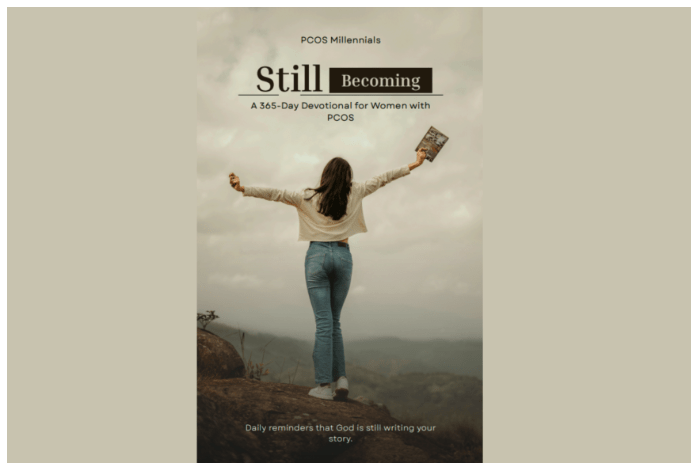
Free eBook for Every Millennial Woman with PCOS: Your Ultimate Guide to Thriving with Hormonal Imbalance

The Hope Project, Preventing Uterine Fibroids
Even the smallest support creates a meaningful impact on this movement.
Click this photo share your blessing:


Leave a comment