
This Is Not an Attack—This Is a Wake‑Up Call
“Women should support women.”
We say it easily. We post it confidently. We believe it—until support requires humility, accountability, or the willingness to check our own behavior.
Here is the truth many women are quietly carrying but rarely say out loud:
Some of the deepest stress, self‑doubt, and emotional wounds women experience come from other women.
Not from strangers. Not always from men. But from women who hold more power—because of age, wealth, status, education, influence, or experience. Women who should have known better. Women who once asked for understanding themselves.
This essay is not written to shame women. It is written to interrupt a cycle.
Because when harm comes from the very people we expect empathy from, the damage goes deeper. It makes women question their worth, their voice, and even their place in women‑led spaces.
This is for every woman—young or old, Filipina or not, rich or struggling, educated or still learning—who believes that sisterhood should feel safe, not suffocating.
If this makes you uncomfortable, pause before reacting.
Discomfort is often where growth begins.

How Women Hurt Women: Quiet Harm That Leaves Loud Scars
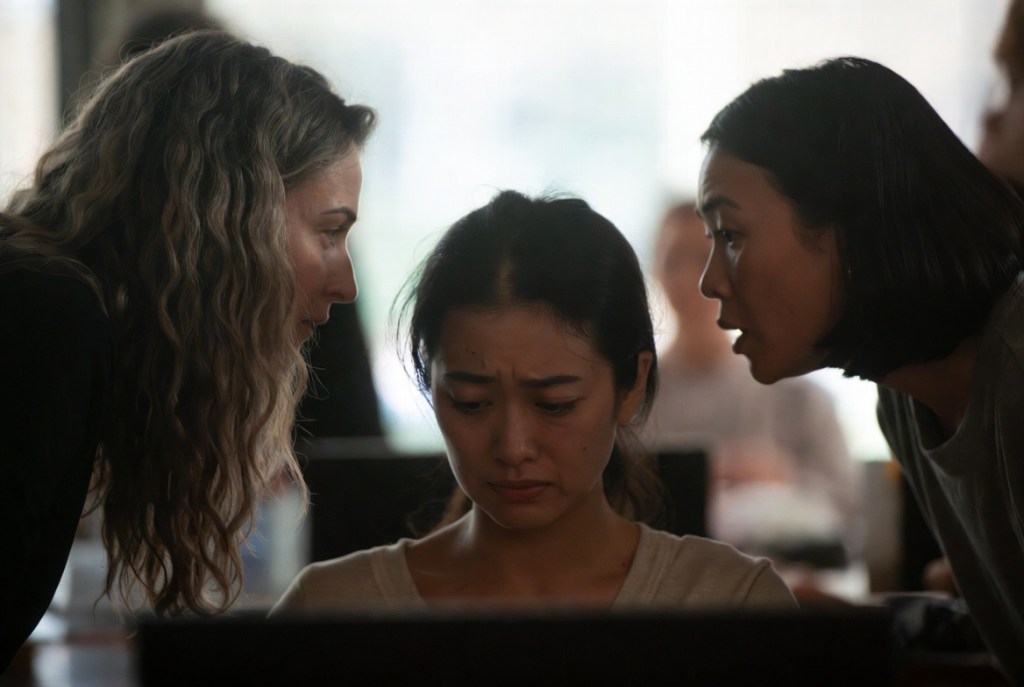
Women rarely hurt other women in obvious ways. There is no shouting match. No dramatic confrontation. No visible bruise.
Instead, harm appears quietly, woven into everyday interactions.
It shows up as comments that linger long after the conversation ends. As advice that feels more like judgment. As support that disappears the moment you stop being useful, agreeable, or impressive.
Research in psychology confirms that female‑to‑female aggression is often indirect and relational, expressed through exclusion, invalidation, subtle control, and emotional manipulation rather than open hostility (Coyne et al., 2017).
This is why it’s so easy to dismiss.
“Baka sensitive ka lang.” (You’re probably just being sensitive.)
“Hindi naman niya sinasadya.” (She didn’t mean it)
“Ganun lang talaga siya.” (That’s just how she is)
But repeated emotional stress is not harmless. Over time, it erodes confidence, silences voices, and teaches women to shrink themselves to survive.
When Mentorship Turns Into Control
Many women enter women‑led spaces with hope. They expect guidance, safety, and understanding—especially from women who are older or more established.
But for some, mentorship becomes something else entirely.
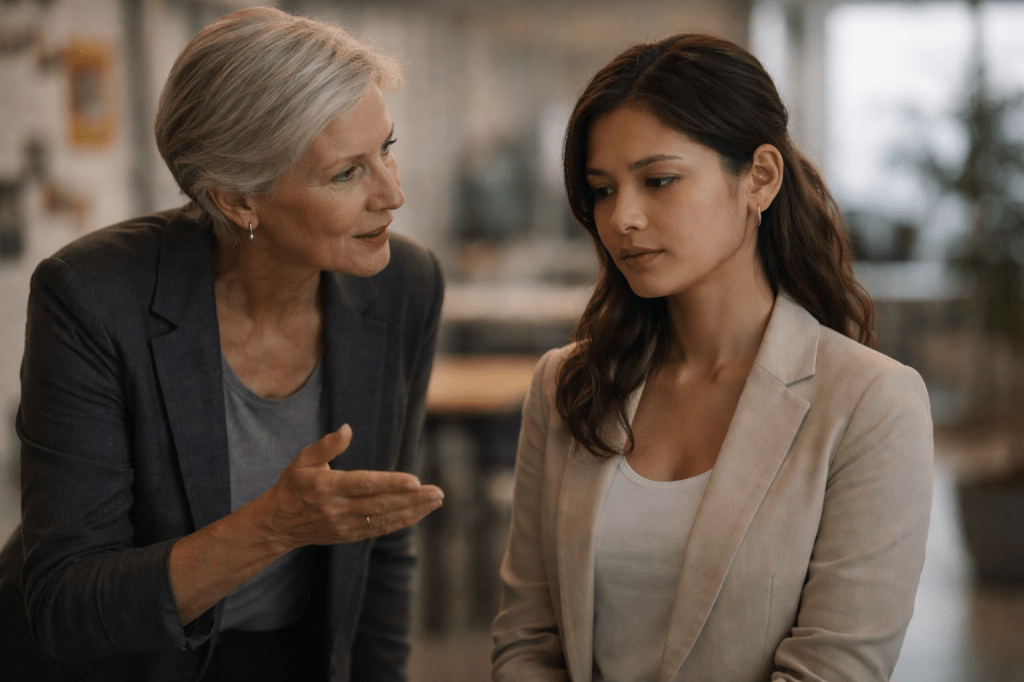
Feedback is delivered publicly, where embarrassment does the teaching. Praise is given selectively, used as leverage rather than encouragement. Mistakes are remembered longer than growth. Boundaries are crossed under the excuse of “preparing you for the real world.”
Research on abusive supervision shows that leadership rooted in humiliation increases anxiety, self‑doubt, and burnout, particularly among women (Harms et al., 2018).
True mentorship builds capacity.
Control builds fear.
And fear does not produce strong women—it produces quiet ones.

Internalized Misogyny: When Harm Is Learned and Repeated
Many women who hurt other women do not see themselves as cruel. In fact, some genuinely believe they are being helpful.
This is where internalized misogyny lives.
It is the belief—absorbed from patriarchal systems—that respect must be earned through suffering, obedience, or endurance. That vulnerability is weakness. That there is only room for a few women at the top.
Studies show that internalized sexism lowers empathy among women and increases tolerance for unequal treatment (Bearman et al., 2009).
In practice, this looks like women policing other women’s behavior, minimizing their pain, or believing that harsh treatment is a necessary rite of passage.
But pain does not make women stronger.
Support does.

Power, Privilege, and the Illusion of Superiority
Power changes dynamics—even among women.
When a woman has money, influence, age, or status, her behavior is often excused in ways others’ behavior is not. Her words carry more weight. Her mistakes are softened. Others are expected to adjust, understand, and endure.
Psychological research on power shows that unchecked authority reduces empathy and increases entitlement, regardless of gender (Keltner et al., 2003).
This is where many women lose their way.
They forget what it felt like to be unheard.
They forget how heavy uncertainty once felt.
And instead of becoming bridges, they become barriers.
Power should expand compassion—not erase it.

The Filipino Context: When Culture Is Used to Silence
In Filipino culture, women are often taught to be patient, respectful, and self‑sacrificing. These values can be beautiful—but they become harmful when weaponized.
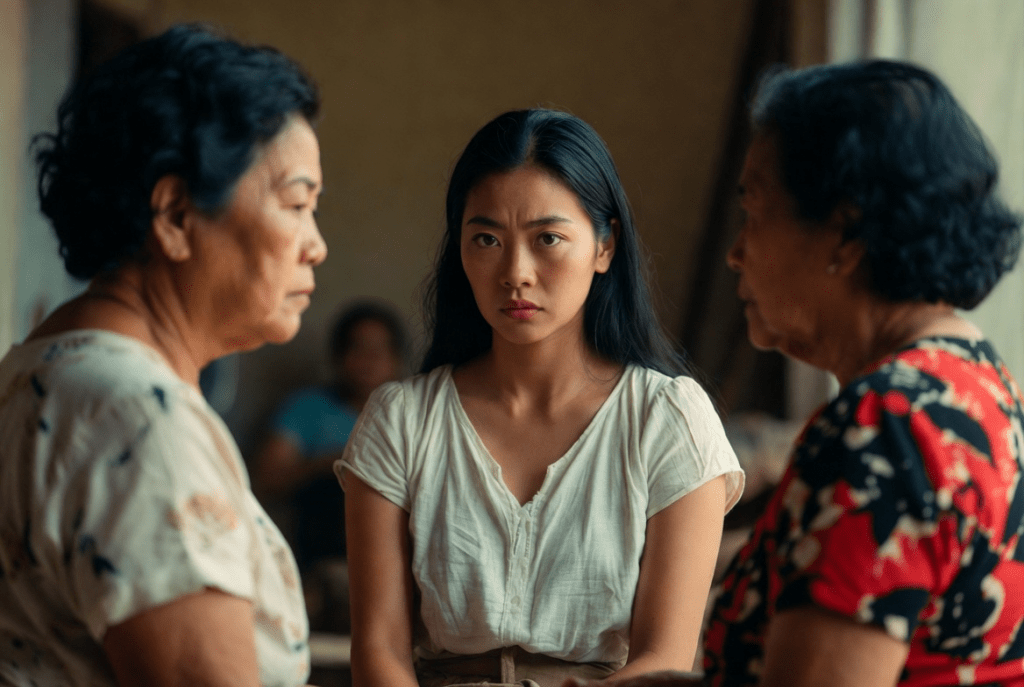
Phrases like “matanda na siya,” “respeto na lang,” or “intindihin mo na lang” are often used to excuse behavior that would never be tolerated if power were equal.
Respect should never mean silence.
Culture should never be used to protect harm.
When women are told to endure instead of being protected, culture stops being a guide and becomes a tool of control.
Why Betrayal by Women Hurts Differently
Research in neuroscience shows that social rejection activates the same areas of the brain as physical pain (Eisenberger, 2012).
When rejection or harm comes from women—especially in spaces built on empowerment—it cuts deeper because expectations are higher.
Women expect empathy from women. When that expectation is broken, the impact lingers. It teaches women to distrust women‑led spaces, to stay silent, or to leave altogether.
And that loss affects all of us.
The Queen Bee Syndrome: Survival Disguised as Strength
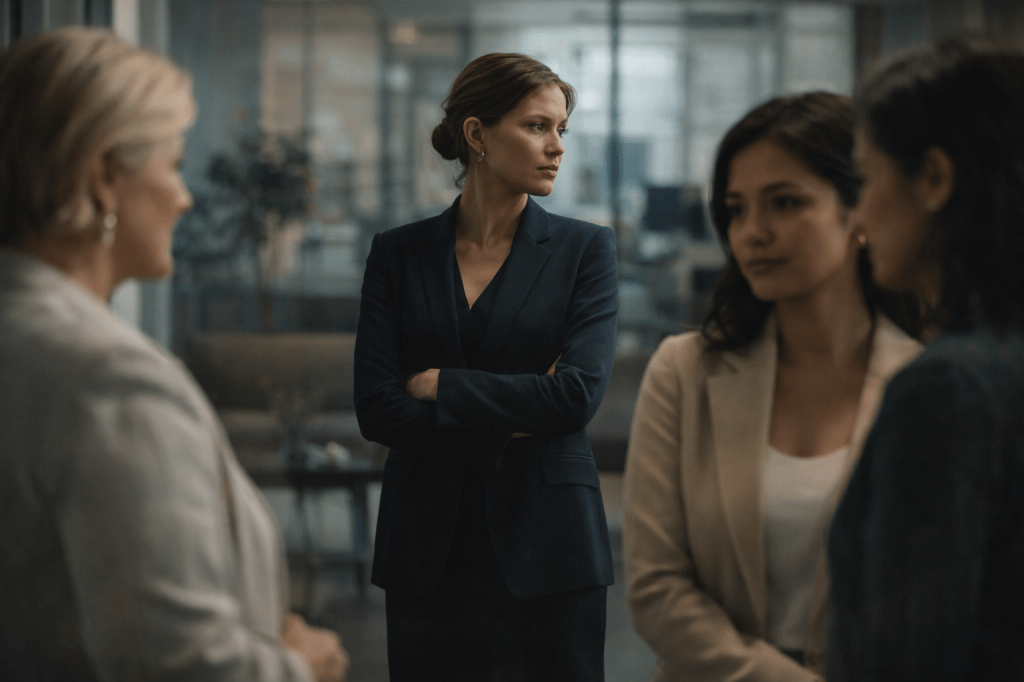
The Queen Bee phenomenon describes women who distance themselves from other women to maintain status in male‑dominated systems (Derks et al., 2016).
Often, this behavior is rooted in fear—the fear of losing relevance, power, or safety.
But survival strategies that harm others are not leadership.
Leadership creates more leaders.
What We Can Do Better as Women
This is where responsibility begins—not with blame, but with honesty.
We can start by practicing humility, no matter how accomplished we become. Experience does not make us morally superior. Age does not grant us the right to dismiss others.
We can use power to create safety instead of fear. If people feel anxious around us, afraid to speak, or constantly unsure of their standing, that is feedback—not disrespect.
We can stop romanticizing toughness. Cruelty is not strength. Emotional intelligence is.
We can mentor without controlling, guide without humiliating, and correct without shaming.
Most importantly, we can make respect non‑negotiable—across age, income, race, education, and profession.

A Message to Women Who Hold Power
If you are older, wealthier, more educated, or more influential, this is especially for you.
Ask yourself honestly:
Do women feel safer or smaller around me?
Do I listen—or do I dominate?
Do I build confidence—or dependency?
Your legacy will not be measured by titles or achievements. It will be measured by how many women felt stronger because of you.
A Message to Women Who Were Hurt
If another woman made you doubt yourself, shrink your voice, or question your worth, know this:
You were not weak.
You were responding to harm that should never have been normalized.
You deserved compassion, not competition.

Break the Cycle
The world is already hard on women.
We do not need to be harder on each other.
If we want real empowerment, it must include accountability. If we want sisterhood, it must include safety. If we want strength, it must include compassion.
A woman should never be another woman’s source of fear or stress.
She should be her place of strength.
Love Reese ❤️
References
Indirect Aggression / Relational Aggression
- Archer, J. (2005). An integrated review of indirect, relational, and social aggression. This review discusses how indirect forms of aggression (such as gossip, exclusion, and social manipulation) operate socially and psychologically — and how they can harm women and girls.
https://pubmed.ncbi.nlm.nih.gov/16083361/
Queen Bee Phenomenon / Women Leaders Distancing from Other Women
- Derks, B., Van Laar, C., & Ellemers, N. (2016). The queen bee phenomenon: Why women leaders distance themselves from junior women. This research explains how senior women in male-dominated environments may psychologically distance themselves from other women — with real effects on workplace inequality.
https://doi.org/10.1016/j.leaqua.2015.12.007 - Sterk, N., Meeussen, L., & Van Laar, C. (2018). Perpetuating inequality: Junior women do not see queen bee behavior as negative. This study explores how women leaders’ unsupportive behaviors impact junior women emotionally and professionally.
https://pubmed.ncbi.nlm.nih.gov/30294289/
Theoretical Support on Indirect Aggression
- Vaillancourt, T., & Krems, J. A. (2018). An evolutionary psychological perspective of indirect aggression in girls and women. This piece, published through Oxford Academic, details indirect aggression as a social strategy among women.
https://academic.oup.com/book/27351/chapter/197093557
Free January–June 2026 Devotional eBook from PCOS Millennials
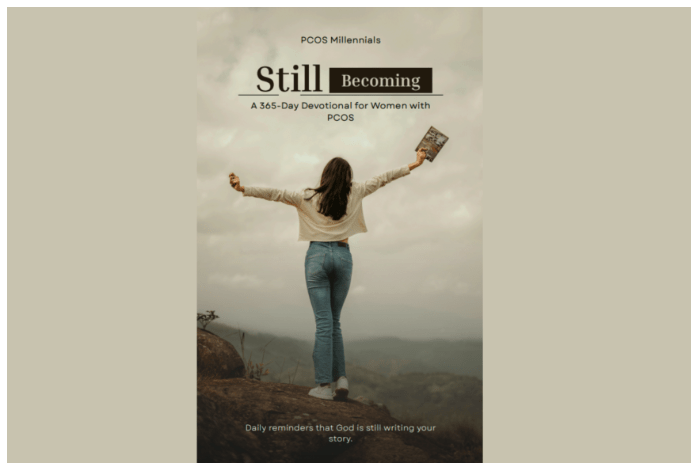
Free eBook for Every Millennial Woman with PCOS: Your Ultimate Guide to Thriving with Hormonal Imbalance





Leave a comment