

There are nights when silence feels unbearable.
The room is still, yet my thoughts are restless, circling questions I have carried for years. I lie awake, staring at the ceiling, listening to my breathing, and wondering how life so quietly, almost politely, led me here. I am in my 40s now.
Ang bilis ng panahon.
What once felt like a distant future has arrived without warning. Not with drama, not with clarity—just with a slow, undeniable heaviness.
For a long time, I believed that life rewarded patience. That if I worked hard, stayed hopeful, and trusted the process, the things I dreamed of would eventually arrive.
Motherhood, I assumed, was one of those things—natural, inevitable, simply delayed.
But life does not always follow the story we were taught to expect.
This blog is not written from certainty. It is written from reflection, grief, and an ongoing negotiation with reality.
It is for women like me, and for women around the world, who are slowly learning to live with a truth that feels both personal and universal: that motherhood, in the form we imagined, may never come.

The Quiet, Gradual Realization
This realization does not arrive suddenly.
It does not announce itself in one defining moment. Instead, it unfolds gradually, disguised as optimism and patience. At first, you reassure yourself.
You say, “There is still time.”
You say, “Not now, but soon.”
You anchor your hope to future stability, to better timing, to circumstances that feel just slightly out of reach.
Years pass quietly. Birthdays come and go. Each year marked not only by candles, but by the unspoken awareness that time is moving forward whether you are ready or not.
You begin to notice the shift around you. Friends who once shared similar timelines are suddenly living a version of life you once assumed would also be yours. Pregnancy announcements appear. Family photos multiply. Conversations change direction.
And you remain in place.
Still functional. Still composed. Still carrying a sadness you have learned to manage in private.

A Form of Grief That Has No Ritual
This kind of grief is difficult to explain because it lacks visible loss.
There is no ceremony for the future you imagined. No public acknowledgment. No structured way to mourn a life that never fully existed outside your own expectations.
And yet, something has been taken.
You grieve the person you thought you would become. The woman who would experience pregnancy, childbirth, and the quiet intimacy of raising a child. The woman who would build a family defined not only by love, but by continuity.
This grief is complicated by guilt.
You question whether you have the right to feel this way. You remind yourself to be grateful. You minimize your pain by comparing it to more visible forms of loss.
But grief does not require permission.
It exists whether it is acknowledged or not.

Women Who Carry Hope in Silence
Many women experience this journey quietly.
They track cycles privately, research symptoms late at night, and read medical articles, blogs, and personal stories in search of something familiar—something that sounds like their own experience.
Hope becomes cautious. Carefully managed. Never fully abandoned, but rarely expressed out loud.
Every delay invites anticipation. Every confirmation of another failed attempt deepens the quiet disappointment. Over time, hope becomes exhausting, not because it disappears, but because it demands so much emotional energy.
Publicly, life continues as usual. You attend celebrations. You offer sincere congratulations. You show up.
Privately, you grieve.

When Financial Reality Shapes Reproductive Choices
One of the most painful realizations is that desire alone is insufficient.
Access to reproductive healthcare is uneven, particularly in countries where medical support is closely tied to financial capacity. In places like the Philippines, fertility care remains largely inaccessible to those without significant resources.
Diagnostic tests, hormone evaluations, ultrasounds, and specialist consultations represent expenses many families cannot absorb. Advanced reproductive treatments remain far beyond reach for women already managing financial insecurity.
As a result, many women live with unanswered questions—not because they are afraid of the truth, but because they cannot afford to seek it.
In these situations, uncertainty becomes a permanent condition.
The Weight of Casual Questions
Kailan ka magkakaanak?
Often asked without malice, this question carries unexpected weight. It compresses years of longing, fear, and self-reflection into a single moment of forced response.
You learn how to answer politely. You learn how to deflect. You learn how to protect yourself in social settings that do not recognize the emotional cost of such curiosity.
What remains unseen is the aftermath—the emotional fatigue, the renewed self-doubt, the quiet unraveling that occurs long after the conversation ends.
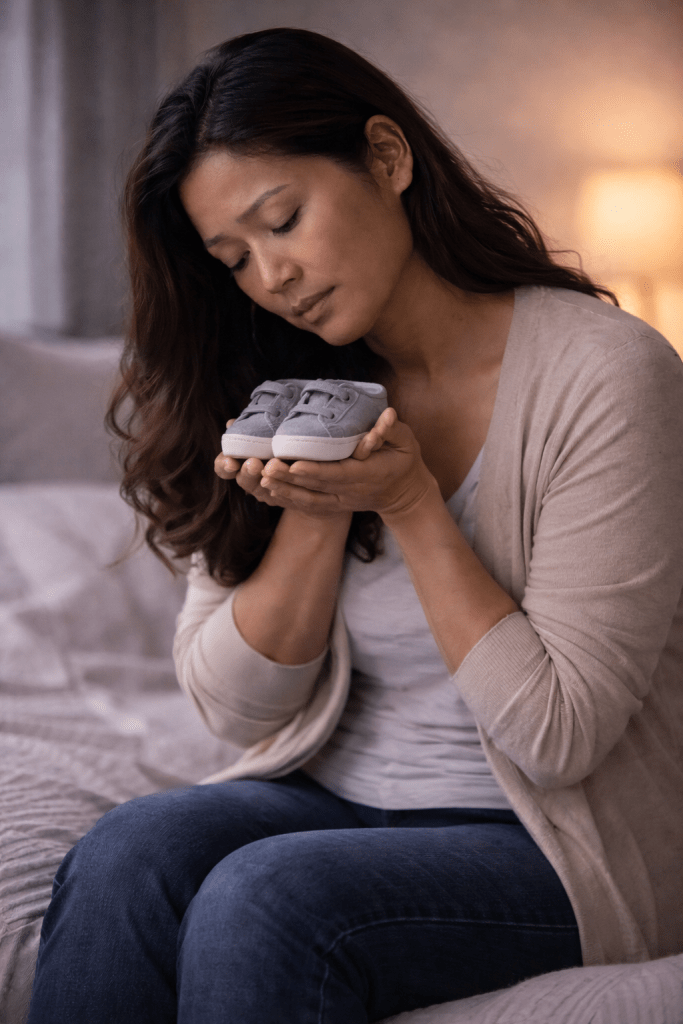
Loving a Child Who Exists Only in Imagination
There is a particular kind of sorrow in loving someone you may never meet.
You imagine them nonetheless. Their face. Their temperament. The life you would build together. These imaginings are not naïve; they are expressions of genuine love.
Letting go of these images feels like losing something deeply personal, even if it never took physical form.
This loss is subtle, but profound.
Aging, Time, and the Body
As years pass, the body becomes a reminder of limitation.
Medical language becomes more cautious. Statistics shift. Conversations with doctors feel increasingly final.
The body, once trusted, now feels uncertain. Time, once abstract, becomes measurable.
This awareness introduces a new layer of grief—one rooted not only in desire, but in biology.

Redefining Identity and Womanhood
Cultural narratives often equate womanhood with motherhood.
From early childhood, women are taught to imagine themselves as future mothers. Few narratives prepare women for identities that unfold differently.
Recognizing that womanhood is not dependent on reproduction is intellectually liberating, but emotionally complex.
Understanding does not erase longing.
The Resilience of Women Who Continue Forward
Women who live with this reality demonstrate quiet resilience.
They build meaningful lives. They nurture others. They contribute, create, and care deeply.
They carry grief without allowing it to define them entirely. This strength is often overlooked. The love once reserved for an imagined child does not disappear.
It transforms.
It finds expression in relationships, in service, in advocacy, and in empathy. This love remains significant.
This blog does not offer resolution.
It offers recognition. For women navigating this experience, acknowledgment itself can be grounding.
You are not alone in this.

A Closing Reflection
If you are in your 40s and confronting the possibility that motherhood may not arrive, allow yourself compassion.
This is not failure.
It is life unfolding differently than expected.
Your worth remains intact. Your capacity for love remains vast.
Sometimes, the measure of a life is not found in what was created, but in what was carried, endured, and transformed.
With love,
Reese
Free January–June 2026 Devotional eBook from PCOS Millennials
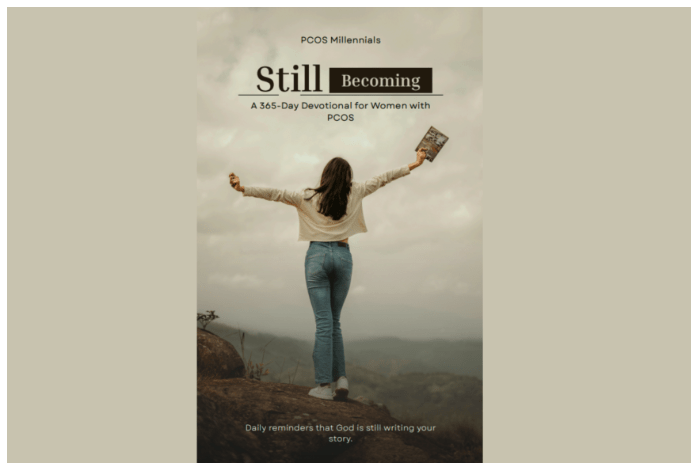
Free eBook for Every Millennial Woman with PCOS: Your Ultimate Guide to Thriving with Hormonal Imbalance




Leave a comment