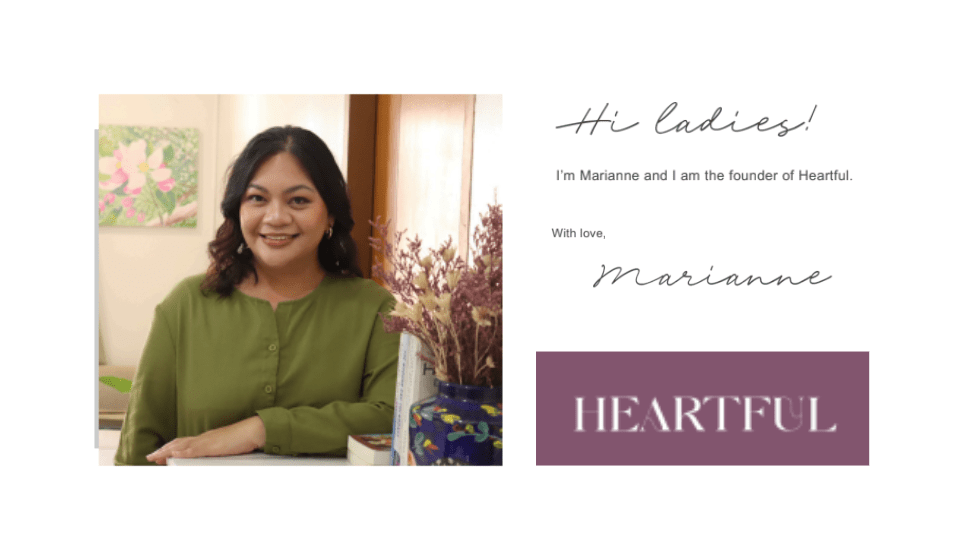
When Marianne from Heartful gracefully reached out to me, sharing her beautifully simple eBook, The 6 Emotional Triggers of PCOS, I felt seen in a way that words can’t fully express.
“Parang ito na yung mga bagay na hindi nasasabi sa kin, pero ramdam ko araw-araw.”
Because let’s be real: our journey with PCOS isn’t just about periods, acne, or infertility. Behind those symptoms lie emotions that weigh us down—guilt, overwhelm, self-doubt, grief.
And the truth is clear: emotional balance matters. Stress, shame, silence—they affect not just our feelings, but our hormones and physical health too. Science backs this up.
Backed by Science: Why Emotional Triggers Matter
1. Heightened Stress in PCOS
Women with PCOS report much higher perceived stress levels and lower quality of life than those without—even if physical stress markers in saliva don’t always differ significantly .
Yet, subjective distress remains notably heightened.
2. Chronic Emotional Distress
Studies consistently show that women with PCOS experience significantly more emotional distress—including depression and anxiety—compared to women without PCOS
3. Cortisol & Stress Biomarkers
PCOS is linked with hyperactivation of the HPA axis. Women with PCOS often show higher hair cortisol levels—a strong marker of chronic stress—compared to those without the condition.
4. Mental Health Burden
PCOS increases risk of depression (up to 7× higher rates of suicidal behavior), anxiety, and eating disorders
Emotional symptoms are far from being “in your head”—they’re real, and impactful.
5. The Insulin Resistance Connection
PCOS is deeply tied to insulin resistance, which itself is influenced by stress and inflammation. Managing insulin sensitivity early can help reduce long-term risks like type 2 diabetes and heart disease.
So yes, what’s in our hearts and minds can show up in our bodies.
Let’s walk through the six emotional triggers Marianne outlined—and see how they resonate.
The 6 Emotional Triggers of PCOS (And the Healing Shifts)
1. “I Am Never Enough”
Many of us carry the weight of being the reliable, the selfless friend, the one made to sacrifice. But this kind of giving depletes us.
Emotionally exhausted, hormonal imbalance follows. Compassion fatigue disrupts cortisol rhythms, stress levels stay elevated, and still, our inner voice says, “I’m not enough.”
Scientific note: Chronic stress and elevated cortisol create a toxic cycle, worsening insulin resistance and PCOS symptoms.
Mind shift: Self-care is for survival, not luxury. “I am allowed to exist for myself. I am worthy of unconditional love.”
Reflection: I used to feel guilty every time I set boundaries. But I realized that if I’m utterly drained, ililipad ko rin yung energy para mahalin yung iba.

2. “I Am Broken and Incomplete”
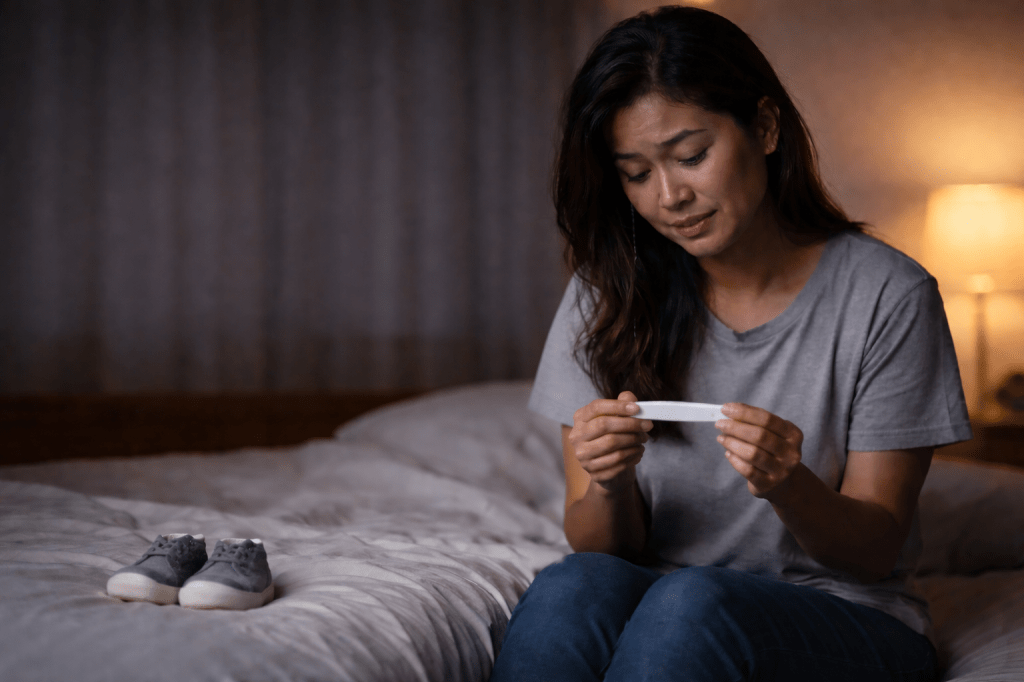
Infertility can cut deep.
People around us think of womanhood in terms of wombs, not worth. But your worth doesn’t start or stop with motherhood.
Scientific note: PCOS-related stress is tied not just to physiology, but also sharp emotional losses—infertility being a major trigger .
Mind shift: “I am whole and sacred—with or without children.”
Reflection: Maraming gabi na humihikbi ako at nagtatanong sa sarili, “Bakit ako hindi madaling mabuntis?” Pero naalala ko: I am more than what my body can or cannot create.

3. “I Must Stay Silent to Be Safe”
Some of us grew up in homes where speaking our truth meant disruption—or worse, dismissal.
So silence became survival. And yet, suppressing emotions builds stress—both mentally and physically. (Interestingly, voice-related thyroid issues are higher in PCOS women—but silence doesn’t heal.)
Scientific note: Women with PCOS show significantly more emotional distress, and clinicians are urged to address emotional health during PCOS .
Mind shift: “My voice matters. My truth deserves to be heard.”
Reflection: Writing my truth—sa PCOS Millennials—was an act of reclaiming. I was shaking, but my words were healing.

4. “I Carry the Weight to Feel Safe”
Weight gain is not always about food or laziness.
Sometimes it’s emotional armor—for protection, invisibility, or distance. But the body holds onto that armor physically—and spiritually, until it knows it’s safe to release.
Scientific note: Chronic stress affects body composition. Elevated salivary biomarkers are tied to higher BMI and visceral fat in PCOS women.
Mind shift: “My body was protecting me. And now—I’m safe.”
Reflection: I used to curse every extra kilo. But then I thought—my body was doing its best. Now, I whisper gratitude before letting go of what I no longer need.

5. “I Have to Be Masculine to Feel Safe”
Growing up, many of us had no guardrails—no protection we could count on.
We became the protector—strong, independent, guarded. But in PCOS, living in constant survival mode—“masculine overdrive”—can elevate androgen levels, worsening symptoms.
Scientific note: PCOS features hyperandrogenism, which is tied to emotional coping strategies and stress adaptation.
Mind shift: “Softness is not weakness. I can let people in.”
Reflection: “Mahal ko, mahina ako minsan”. And there was my healing moment—letting someone support me felt like coming home.

6. “I Can’t Digest Life”
Insulin resistance means your body struggles with sugar.
But emotionally, you might also struggle to digest joy, rest, peace. Some days, even if blessings come, you feel too numb to receive them.
Scientific note: Insulin resistance underlies many PCOS symptoms—and it’s deeply entangled with stress and inflammation.
Mind shift: “Life’s sweetness is safe to receive.”
Reflection: I thought I couldn’t feel joy again. But it snuck in—little by little. A gentle hug, a morning kape, a friend saying, “Kaya mo yan.”

Why This Is Especially for Filipinas
Here in the Philippines, we carry unspoken burdens: being sacrificial daughters, supportive wives, or provider nanays—even at the cost of our own health.
PCOS Millennials exists to remind you: you are not alone.
Yes, PCOS is a medical condition. Pero it’s also an emotional journey. And when we talk about it, when we share our stories, we break the silence that keeps us isolated.
Marianne’s eBook mirrored my heart. It reminded me: healing isn’t just physical—it’s emotional, spiritual, relational.
If any of the six triggers echoed deep in you—please know: you are not alone. Healing begins not with perfection, but with compassion.
You are enough.
You are whole.
Your voice matters.
Your body is protecting you.
Softness is strength.
Joy is safe to receive.
Keep Going, Together
Want to explore these triggers deeper? Visit Heartful Global to learn more.
Looking for your PCOS “barkada,” your soul circle, your healing space?
Join us at PCOS Millennials—where stories are held, emotions are honored, and healing happens.
Love, Reese ❤️
Free eBook for Every Millennial Woman with PCOS: Your Ultimate Guide to Thriving with Hormonal Imbalance




Leave a comment